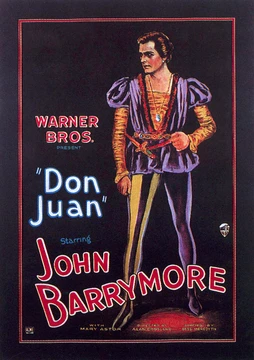
Cinema of the United Kingdom
British cinema shaped global film from the 19th century onward.
The United Kingdom’s film industry has shaped global cinema since the 1800s. The earliest surviving film anywhere, *Roundhay Garden Scene* (1888), was captured in England by French inventor Louis Le Prince, and British innovators also led the way in early color filmmaking. Movie production hit its highest volume in 1936, but the 1940s are widely considered British cinema’s golden age, marked by celebrated works from directors like David Lean, Michael Powell, and Carol Reed.
A long list of British actors have earned critical acclaim and international fame, including Alec Guinness, Patrick Stewart, Julie Andrews, Michael Caine, Joan Collins, Sean Connery, Olivia Colman, Benedict Cumberbatch, Daniel Craig, Daniel Day-Lewis, Judi Dench, Helen Mirren, Olivia de Havilland, Audrey Hepburn, Anthony Hopkins, Glynis Johns, Vivien Leigh, Ian McKellen, Peter O’Toole, Gary Oldman, Laurence Olivier, John Gielgud, Maggie Smith, Joan Plowright, Emma Thompson, Alan Rickman, Rachel Weisz, Kate Winslet, and Keira Knightley. Some of the highest-grossing film franchises ever—*Harry Potter* and *James Bond*, ranking fourth and fifth globally—were made in the UK.
British cinema’s relationship with Hollywood has long been debated, involving both competition and collaboration. Filmmakers like Alfred Hitchcock, Christopher Nolan, and Ridley Scott, as well as performers such as Charlie Chaplin and Cary Grant, found success by blending their work with American productions.
In 2009, British films earned roughly $2 billion worldwide, capturing about 7% of the global market and 17% of the UK market. UK box office revenue reached £1.1 billion in 2012, with 172.5 million admissions. The British Film Institute has compiled a list of the 100 greatest British films, and the annual BAFTA Awards, run by the British Academy of Film and Television Arts, are seen as the UK’s equivalent of the Oscars.
**History**
**Origins and silent films** The world’s first moving picture was shot in Leeds by Louis Le Prince in 1888, and the first moving images on celluloid film were made in London’s Hyde Park in 1889 by British inventor William Friese Greene, who patented the process in 1890.
Robert W. Paul and Birt Acres built and operated the first working 35 mm camera in Britain, producing the country’s first film, *Incident at Clovelly Cottage*, in February 1895—shortly before a dispute ov
- earliest known surviving film
- Roundhay Garden Scene (1888)
- first British animated film
- The Hand of the Artist (1906)
- oldest continuously operating film studi
- Ealing Studios (founded 1902)
- peak production year
- 1936
- golden age
- 1940s
- 2009 global box office gross
- $2 billion
- 2012 UK box office earnings
- £1.1 billion
Lore & Background
The world's first moving picture was shot in Leeds by Louis Le Prince in 1888, and the first moving pictures developed on celluloid film were made in Hyde Park, London in 1889 by British inventor William Friese Greene. The first people to build and run a working 35 mm camera in Britain were Robert W. Paul and Birt Acres, who made the first British film Incident at Clovelly Cottage in February 1895. Early British films were often melodramatic, adapting Shakespeare plays and Dickens novels. In 1902, Ealing Studios was founded, becoming the oldest continuously operating film studio in the world. The earliest colour film in the world was made in 1902, capturing everyday events, and was rediscovered in 2012.
Reader's Guide
The identity of British cinema, particularly in relation to the cinema of the United States, has been subject to various debates. Its history includes competition as well as collaboration with the United States cinema in production of a huge number of film projects. British filmmakers such as Alfred Hitchcock, Christopher Nolan, and Ridley Scott achieved success combining their work with United States filmmakers, as did British performers such as Charlie Chaplin and Cary Grant. The British Film Institute has produced a poll ranking what it considers to be the 100 greatest British films of all time, and the annual BAFTA Awards are considered the British equivalent of the Academy Awards. Many British actors have accrued critical success and worldwide recognition, including Alec Guinness, Judi Dench, Anthony Hopkins, and Maggie Smith. Films with the largest ever box office profits made in the United Kingdom include Harry Potter and James Bond, the fourth and fifth highest-grossing film franchises of all time.
Did You Know?
- The oldest known surviving film in the world, Roundhay Garden Scene (1888), was shot in England by French inventor Louis Le Prince.
- The earliest colour film in the world was made in 1902 and rediscovered in 2012 after lying forgotten for 110 years.
- Ealing Studios, founded in 1902, is the oldest continuously operating film studio in the world.
- The Cinematograph Films Act 1927 required cinemas to show a certain percentage of British films, leading to 'quota quickies'.
More in Film History & Movements 1-21
Spotted an error? Know more?
This is a living reference — every entry is fact-audited, and reader corrections feed straight into our audit queue. Suggest an edit · See this site's audit record